
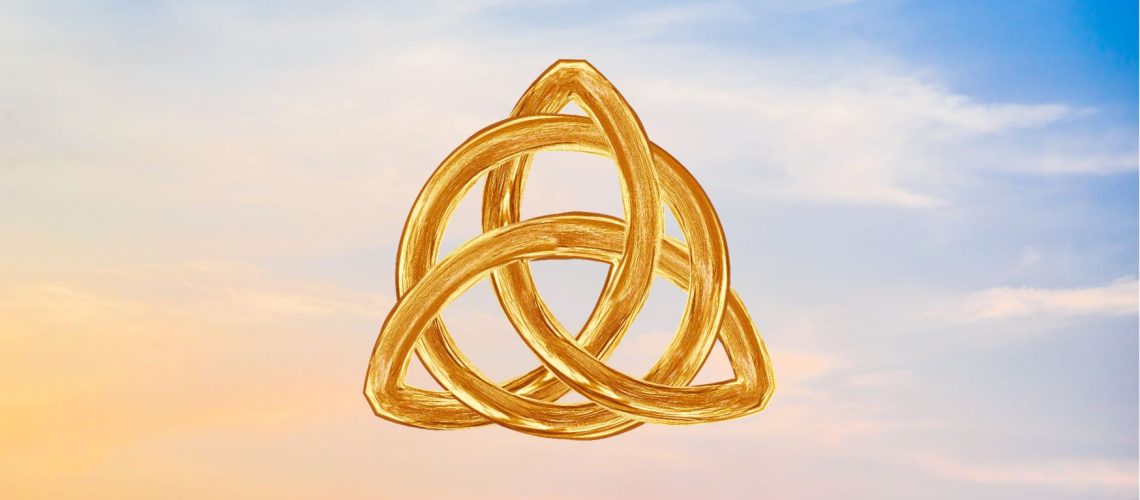
On Trinity Sunday, we are invited to contemplate the profound mystery of God’s inner life. In the third chapter of John’s Gospel, we encounter the beautiful truth that God’s response to the world is rooted in overwhelming, self-giving love: “For God so loved the world that he gave his only Son.” This passage challenges us to recognize how we relate to this Triune God.
Often, we are tempted to search for the Divine as if looking for a distant object or a lofty concept. Yet our God is not one whom we ‘find’ by our human efforts outside ourselves, but one whom we ‘find’, as Pascal put it, only because ‘he found us first’. The mystery of the Trinity is not merely a theological puzzle to be solved, but a living reality taking root in our own hearts. This God is within us, as Father, Son and Holy Spirit or – reciprocally – we are as children of the Father, through the Son, in the Holy Spirit.
St. Augustine of Hippo beautifully captured this profound inner presence when he stated that this God is ‘more intimate to me than I am to myself’. The early Fathers of the Church understood the magnitude of this gift, describing this transformative relationship as our ‘divinisation’ – our gracious invitation to share in the very life of God.
We might mistakenly fear that yielding to such an overwhelming divine presence could erase our individuality. However, far from diminishing our humanity or infringing on our rights and responsibilities, God truly liberates us and fulfils our human dignity. Recognizing the Trinity dwelling within us impels us to respect ourselves for what we are and to serve our fellow humans. When we truly see God within ourselves, we inevitably see Him in others, recognizing that all of them are called to be children of God, our brothers and sisters, through Jesus in the Spirit. Ultimately, this divine love flows outward, calling us to serve also the rest of God’s creation, tending to the world the Father so deeply loves.
Fr Stephen Berecz